
Why we don't publish a price list
A price list filters out the exact buyer with a £1,000 fix. Here is what we do instead, and why we publish a floor rather than a range.
Team Quorix Digital
The engineers and strategists who do the work
- commercials
- scoping
Most studios publish a price list. Some publish "from £X". Almost none will tell you what a bug fix costs, which is the number most prospective clients actually want, because most prospective clients are not building a new platform.
We have deliberately not published a rate card. Here is the reasoning, including the parts that are inconvenient for us.
What a price list actually does
It converts two hard questions into one easy one. Instead of asking "what does this work need?", the reader asks "which row is this?" — and the answer becomes a budget conversation with a vendor rather than a scoping conversation with an engineer.
That is worse for everyone. The client picks a number that fits their budget rather than the number the work needs. We get a project that was scoped backwards, from the price down instead of the problem up.
Who it filters out
The buyer with a broken system and £1,500 to spend on it is the most time-pressured buyer a studio has, and they are the easiest to help. They have a real problem, a real deadline, and no appetite for a discovery process.
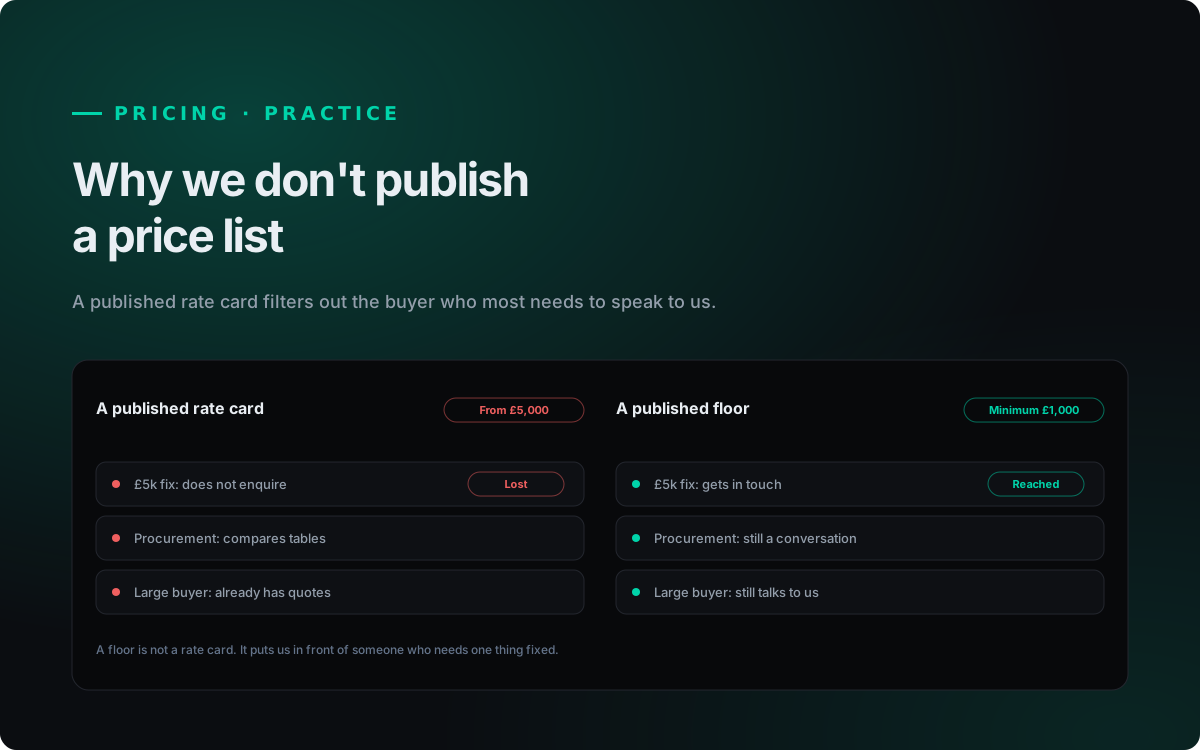
A published rate card loses them, because there is no row for them. "From £5,000" reads as "not for us". The project sits broken for another six months while they look for someone who will just fix it.
So our published figure is a floor, not a range: projects start at £1,000. That is honest — it is genuinely the smallest useful engagement we will take — and it puts us in front of the buyer who has a small problem and needs someone who will start.
The other reason, which is more self-interested
The moment you publish a number, you have a commercial interest in the project being worth that number. That is a subtle and corrosive shift in how a conversation goes.
A studio quoting per project is arguing about scope. A studio with a price list is quietly arguing for scope. Those are different conversations, and only one of them is the client's friend.
What we do instead
- A £1,000 minimum, published. Not hidden behind "from", because hedging a number you are happy with is just losing the sale.
- A fixed price after scoping, written down, with what is explicitly not included.
- A discovery sprint as a separate, cheap product for people who need to know the shape of the problem before committing budget.
- No hourly rates at all. They reward slow work and they make the client watch the clock.
The trade-off is real: some buyers will walk away because they wanted a number on the website. We have decided that the buyers we would rather work with are the ones who want to understand the problem first.
When we will tell you a number immediately
If you ask "roughly what is this going to cost?" on a first call, we will give you a range. Not a quote — a range, based on how similar projects have actually run. It is not binding, and we will say that.
What we will not do is put a number on the website that we have to honour before we have seen the problem.
If this sounds like your problem
Get a fixed price for your project
We quote per project after scoping, not from a table. A 30-minute call is usually enough to tell you whether the work is worth doing at all — and we will say so if it is not.
No pitch deck. A 30-minute call, and we will tell you if we are the wrong studio for this.
Was this worth your time?
One tap. We read every answer and it changes what we write next.